Tuesday, January 9, 2018

Sweet Science


Insulin Sensitivity.

The newest term in a long line of humbling information teaching me that no matter how much I learn, I still am a nobody and the body is really freaking complicated.

Before continuing, let's clear something up. I am not a chemist nor am I a nutritionist. I took gen chem and half of organic chem in college, and have biochemists in my family....but I am not a chemist and I don't remember much. I know jussst enough to see a molecule, read about it, and kind of get what they're saying.

So here's my just enough knowledge to translate into real, practical information. I just have the chemical structures because I like them and am a visual learner.

Now a lot of talk about sugar before I talk about insulin, the real topic at hand. I'll get there eventually. There is SO MUCH more to this topic and I went down many rabbit holes writing this blog. This is not called Scientific Journal, this is called Map to Fitness. This is my futile attempt at understanding the complex world of nutrition and fitness. I'd like to think there's decent information here, and by explaining concepts I am forced to understand them better. Also, there are many things that end in "ose," the suffix associated with sugar, that I do not discuss. I'll talk a little about simple sugars vs. complex carbs and really for this blog, that's enough for now.

Enough disclaimers.

We have all heard we need to avoid high fructose corn syrup!! But why? And are all forms of fructose bad? Doesn't the body need sugar to operate?
Image result for sugarCorrect. I knew the brain operates on "sugar" to function, and the body will create molecules from other sources in order to survive when necessary. This is the basic premise of the Ketogenic Diet, which insists on depriving people of all carbs in order to undergo ketogenesis, which in very simple terms uses fat to create ketones to compensate (NOTE- I tried figuring out if the ketones then undergo reactions to become glucose and couldn't find anything easy to understand. It doesn't really matter for the purpose of this blog). I am not a fan of that diet, at all, but that is a post for another day.

I digress. Glucose is really a form of sugar that the body likes and uses well. It is used for immediate energy, it feeds the brain, it travels in our blood (what we mean when we talk about blood sugar levels), it can be stored in muscles, and it gets stored in the liver as glycogen aka energy reserves. Like anything else, too much of a good thing is a bad thing, and you don't want that getting too high either. That's when you start storing it as fat. Fat, from an evolutionary perspective, is a great storage system; if and when times get hard and food is scarce, your body can use fat for energy! This is what happens when we are in a caloric deficit and how we lose weight. So, glucose is used efficiently for energy and energy storage, but we only need reasonable amounts.

As you can see in the structures to the left, fructose looks a little different. If you're unfamiliar with ochem, don't' worry.  In very unscientific terms, there is a ring of 6 things in glucose, and a ring of 5 things in fructose. The carbon that is not being used in the ring in fructose is pulled out and adds a little extra bulk on the outside. The molecular formulas are the same, C6H12O6, but the structures are different. This can have a huge impact on how the body processes these molecules. Apparently, unlike glucose, fructose is only processed in the liver and has been found to be much more lipogenic (fat producing). From what I've been reading, it does not trigger insulin (it does not need insulin to be processed),  and has been shown to lead to insulin resistance. More on that later.  Fructose also appears to not produce leptin, which is a hormone telling your brain that you're full and fed. Leptin is associated with energy expenditure and balance, and some studies suggest that chronic fructose exposure may lead to leptin resistance. In this case, your body has high levels of a hormone saying hey, I'm full, but the brain doesn't process it and so you eat more.

Related imageSucrose, aka table sugar, in simple terms consists of these two molecules combined (with one less Oxygen). When you eat sugar your body breaks this molecule down into the two components. Glucose is processed and used for energy, as described above, and any excess of glucose and fructose is then essentially stored as fat. So when people say they're having healthy sugar because it's some raw "natural sugar," okay. But you're still essentially getting fructose!


Now that we've discussed the molecules just a little bit, we can explore something called the glycemic index (GI) of foods. Essentially, this refers to how food impacts blood glucose levels. High GI foods enter the bloodstream very rapidly because they tend to be simpler in structure and result in a rapid insulin spike. Remember how sucrose is broken down to glucose and fructose? It's that type of concept, only other molecules are much larger, involve more complex processes, break down at different times in the digestive process, etc. etc. Insulin can help shuffle glucose into muscle and be used for immediate energy, but it can also help things store as fat easier. GI is typically discussed in terms of <55 is low, Moderate is 50-70, and High is >70.

Looking at a chart of GI is not sufficient, however. I won't get into how they label GI foods, but suffice to say it's based on a certain amount of each food, not the actual serving size. Glycemic Load (GL), on the other hand, evaluates the effect based on actual portions. This changes the story dramatically. GL is 0-10 Low, 11-19 Moderate, and 20+ high. While both are useful in their way, I do not currently know why GI would ever be discussed without GL. For example, according to a chart from Harvard (cited below),  watermelon may have a GI of 72 (High!), but a GL of 4 (Low). The chart below shows this nicely. There's a lot of added complexity too, depending on what you eat in your meal. If you eat a high GI food, but it's paired with something low GI (i.e. fibrous foods), it can slow digestion and the rate/amount of glucose in the blood.
Image result for glycemic index vs. load chart

[[[Harvard has a user-friendly chart for some more common foods on their site (Click here). If you want to see a fairly exhaustive list, the above link's information is based on this 2008 study by Fiona S. Atkinson, RD, Kaye Foster-Powell, RD, and Jennie C. Brand-Miller, Ph.D. (Scroll down to the supplementary information).]]]

Okay. Now that we've talked about all of that, I get to my point!!!

When we eat carbs, our blood sugar rises. Insulin is a hormone released by the pancreas in response. Insulin then strolls around the blood telling other cells to pick up the glucose. Cells can be more or less responsive to insulin. If less, the pancreas starts shooting out more insulin and over time this can hurt the pancreas and result in high levels of blood sugar and insulin. Eventually, the pancreas can be damaged and blood sugar rises even more.
Related imageIncreased fat intake/development can contribute significantly to this. I like to imagine fat as greedy, mafia like cells that steal the glucose before other cells get a chance. Biochemically this is probably not correct, but the personification works for me. There's more to it, but that's enough for now. Thin people can be insulin resistant too, as other factors can contribute like fructose intake (sound familiar?), inflammation, inactivity, and of course, genetics. Inulin resistance causes a whole host of problems.

Insulin sensitivity refers to the extent to which your body uses glucose "well." So, million dollar question, how do we improve our sensitivity?

REDUCE SUGAR: If you didn't get that from this post, I have failed you.

LOW GI/GL FOODS: Hopefully you saw this one coming too.

TIMING: Post-workouts seems to be when we're most insulin sensitive (see addendum on my Best News Ever post)

LOSE FAT: If there are less mafia-like visceral fat cells to nab the glucose, more can be used for muscle storage!

EXERCISE: Not only does exercise help you lose weight directly, it also does something with the cell receptors (i.e. marathon runners' insulin use is so well used that blood sugar is quickly used and the pancreas reduces insulin release).

OMEGA 3's: nothing to see here. Look at any "how to" in the health world and you'll see these.

SLEEP/STRESS REDUCTION: look at my previous posts. I don't know about this specifically, but it sure makes sense. As a clinical psychologist in training, I could go on and on about how these two affect physical health and well-being.

INTERMITTENT FASTING: I guess. I don't know anything about it. But Dr. Jim Stoppani said so in a recent post I saw on bodyspace and other articles on insulin sensitivity have suggested the same thing. This is the article that did me in for this whole freaking post. One thing led to another... Here's Jim's guide on IF

I saw some other things too: magnesium, donating blood regularly, stop smoking, and eating "whole" foods (source), and chromium potentially helps especially insulin resistant populations.

And there you have it. Insulin Sensitivity. Direct health benefits. Reducing risk for many medical concerns. Maximizing the use of your caloric intake.


Saturday, May 27, 2017

From Freud to Fitness


I have shocking news that will revolutionize the world of fitness!

I don't. I've just managed to loose about 5 pounds in 2 weeks by counting calories/macros while lifting only. 

I am proud of this accomplishment, especially since working out is a formal commitment; I am committed to 63 hours per week (class, research, practicum), plus about 20 hours a week of homework outside of class. Three 15 hour days are exhausting - mentally, physically, emotionally, spiritually, basically all of the "ally"'s. It's not even 15 at one site. I travel across Chicagoland, from north, to west, to central, back north, and I have to be on my game everywhere I go. I'm literally diagnosing people at my practicum, under supervision of course, so what I do actually matters in the long-term of people's lives. By Friday I have very little brain capacity left. Yesterday I tried to get extra vinegar and easy oil on my sandwich as subway, but couldn't get out the words. "Extra oil. Easy vinegar. No. That's not right. Extra oil. Wait, no. Extra oil. Shit. No..."

While my current schedule is beyond draining, I genuinely believe lifting has helped me regain my sanity and provides some emotional stability. I have next to no control over so many things, and normal life responsibilities float over my head relentlessly. A friend had planned to come into town this weekend for the holiday and I had to tell him I couldn't host. I felt terrible, but I have 3 out of town weddings in 4 weeks, one of which I am in. This week, I'm helping at a huge memorial day event on Sunday, and have to somehow finish 3 weeks worth of assignments. Sorry to dump all my baggage. I'm going somewhere with this I promise. 

Ironically, committing time to the gym (and the occasional blog) makes managing time easier. Furthermore, I believe my cognitive lapse at Subway would be far more common without the beautiful grounding provided by the gym. I have the science to support this claim too. Ready?
Image result for deep sleep muscle recovery

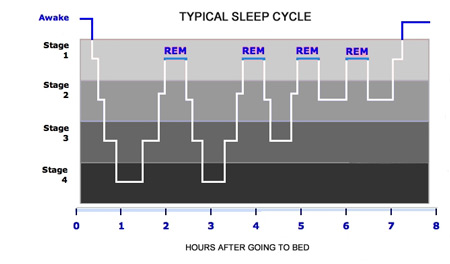
1.) Exercise increases body temperature, which is associated with prolonged periods of deep sleep (stage 3 and 4). Deep sleep is associated with cognitive and muscular recovery, and memory storage. By the transitive property, working out helps me retain information learned at practicum and in class, and helps me stay focused/functional during the day. 

Image result for deep sleep muscle recovery

2.) Biologically, the human body operates in cycles. Most know of the 24 hour circadian rhthym (this is approximate, it's really 22-26 in humans). However, we have shorter cycles too, which is why most of us experience a slump circa 2pm and we're told to get up and move around every 90 minutes or so. When working for long periods of time, like the 12+ hour day I have today of studying, taking a solid break is actually associated with increased productivity overall. I recently read an article, which reflected many, many others I have read, of the importance of recovery time for mental processes. Instead of cramming work into the hour break I have on some of my 15 hour days, I've decided to use my school's "fitness" room, which is basically a small dance/yoga studio, and creatively fit in my workout for the day. Recharge mentally for class to follow. 

3.) Recharge mentally? Grounding in the present. This is a basic tenet of Mindfulness. Perhaps you've seen this word on adult coloring books in the check out isle. Basically, Mindfulness operates on the same principles known for years, just called different things depending. The idea is that we all have so much shit to worry about, to dwell/ruminate on, to stress over, etc. that our bodies and minds need a break from it all. Instead of living and focusing in the past or future, take some time in the present. Mindfulness is a fancy word meaning focus on one thing in the present, that's it. It can be coloring, okay, or meditation, watching breathing, playing sports, exercising, whatever works. If you've ever called IT, you know their advise is to turn it off and back on. I turn my brain off for an hour and lift heavy things. 

4.) The endorphin release during exercise produces an analgesic effect, which creates the sensation of pleasure through, or covering, the experience of pain. Other feel good neurotransmitters are released, probably through the pride and general bad-assidry associated with working out (I am fairly confident I know which neurotransmitters are involved in this process, but why risk saying something incorrectly when anyone who happens to stumble on here probably doesn't care). Basically, most of the time, a workout will leaving you feeling happier, prouder, and more bad ass than you felt before. Happy people do good work. 

Image result for social media anxiety disorder5.) Speaking of self-perception, we are constantly comparing ourselves to others. With the advent of social media and smart technology, we have more means and access to the best parts of other people. I will note that I particularly hate Instagram because I feel my friends who post regularly are too busy getting the right photo to actually enjoy what they're doing. Despite the quality of living being leaps and bounds better than any other period in history, people are significantly less happy, more depressed, more anxious, and more self-harming. Why are we surprised by this? I love lifting because your only competition is yourself. Even those who compete have to see themselves as winners; I know that statement sounds cheesy, but if you've ever seen what a bodybuilding competition looks like, you'd understand. They all look unbelievably incredible. Frankly, when I look at a magazine when I'm in a fitness slump, I think wow. I'll never look like them. When I look at a magazine when I'm consistently working out and eating well I become indifferent to the pictures, or motivated by fit people. I'm doing what I can to be healthy. There's literally nothing else I can do, aside from tweaking things. I have found myself on facebook far, far less. I just don't care. 

In summary, I'm happier and more productive, I retain information better, and my body feels better. I started this blog post mentioning weight loss and didn't touch on it since. As exciting as it is to see the scale go down, knowing I'm building muscle (achieving the elusive lean gain, fat loss objective), that's honestly only a bonus. 

(((Side note - Being active on Body Space, Bodybuilding.com's "social media" site has been extremely helpful for me. It has the opposite effect as other social media sites. It leaves me feeling encouraged and motivated. I strongly recommend it)))

Monday, May 15, 2017

Army Strong ...Eventually.


After years of talking about it (10.5 to be exact), I now am officially a commissioned officer in the United States Army. Hooah!

I am honored to report that I was selected for the prestigious HPSP (Health Professionals Scholarship Program) award, meaning I will be a "selective reservist" for the next two years, defend my dissertation, go to BOLC (Basic Officer Leadership Course), [hopefully] pass the EPPP (licencing exam), train in specialty courses, including SERE (Survival, Evasion, Resistance, and Escape), and continue my  minimum three-year commitment as an active duty Clinical Psychologist. Enough acronyms for you?


Amidst all the celebrating (this really is a life-changing type of deal), my recruiter informed me I'd be doing a new type of physical they were testing. Instead of push-ups, sit-ups, and pull-ups, I did functional tasks like throwing a medicine ball, long jump, dead-lifts, and sprints. The first tasks were no problem. I even had a one rep max of 190 for DL, which isn't too bad considering I hadn't been doing any serious weight training.

Then the sprints.

Need I say more? Pathetic. Fortunately, it was "research," not for qualifying, but yeah, I would've failed. Hard.

I will beat it of course. The task of running back and forth, trying to beat the next beep... well it got me this time, but I won't be had again.

The problem is this "fat skinny" girl is no longer living up to her name. I have to admit I'm pretty much just an overweight girl now, logging in at 170, and less of it is muscle than I'd like to admit. 4 doctoral classes, practicum applications, creating a 150 page binder of death proving I've learned something this year, no sleep, 20-24 hours a week doing diagnostic work at a in-patient psychiatric unit, doing research one day a week at a local hospital, and trying to you know, eat or be social ever, all combined to create the perfect storm of an impossible, survival-mode semester. There are some other very serious things going on in my family too (f cancer).

In short, I don't blame myself.

I do, however, put some blame on this one company who I will not name since I'm associating myself with the Army in this post. Now, I am not usually a product basher, and I will gush over products I like (looking at you Coldeeze), but I have no problem criticizing this company. They are marketed as a meal delivery service that provides healthy options of protein and veggies in individually wrapped portions. It was recommended to me, and as a single grad student struggling to find time to blink, I thought it may be worth a try. Using a promotion I got a very good rate and even got free breakfasts thrown in. All and all I was saving time, money, and getting healthy options in the process. Win-win-win.

Wrong. I noticed I started gaining weight, but of course with so much going on it could easily be stress. Yet the weight gain did not stop, even as the workouts increased. So, I did what I should've done from the beginning: I looked up the nutrition facts. One tiny little mini omelet and sausage (surely turkey healthy sausage right?) contained 400 calories and 35g of fat. In context, that's at least half of my daily fat allowance. And it's tiny! They gave me specialty butters, which I naively assumed were like "I Can't Believe It's Not Butter" and didn't think much of it. The instructions said I could have as much of them as I wanted! Notice the lack of carbs here (I was supplementing carbs on my own). This is the Adkins diet. 100%. No thank you. I was probably getting over 100g of fat ON A DAILY BASIS. No wonder I gained weight.

So now I'm back, as I often start, doing Jamie Eason's Live Fit training schedule. It simply works for me. Focusing on lifting, then introducing cardio, then more dynamic work outs just makes sense for my body type and what I like / can realistically commit to. When I'm in a hurry (ha, aka every day), I can manage to squeeze in her hour-long plan in as little as 30 minutes. I like that I don't have to plan what I'm doing, and I know that I'm hitting every area.

This time I'm using Body Space (2014dawn) to track my workouts, instead of a journal, to hold myself accountable. At most, I can only do 4 days a week because of my three 15 hour days each week this semester. I may not be doing the calendar exactly, but I'm doing it all the same.

When I'm done I'm going full Navy Seal training, using their integrated program to include sprints, endurance, HIIT, and strength. It's a solid layout, even if modified for my impossible schedule.

I'm also using my fitness pal (lisadisa) to keep track of general calories / macros. I made the settings based on what I know to be realistic for me, especially now that they let you set grams instead of percentages. No plan calls for 30% 30% 30%, but that's basically what mine is. I should probably cut down on fat, but this is about starting consistent, not depriving myself. Plus, my body will probably be on withdrawal after all that fat courtesy of the product that must not be named on this blog.

Image result for army strongI'll be back on here too. It amps me up and motivates me to press on. With hard work and perseverance I am confident I can be the fat-skinny girl once more, and maybe, one day, really be what I would consider Army Strong. 💪

Wednesday, June 8, 2016

Round Two Because of the Tattoo

Hi.

This is the new tattoo. It requires a bathing suit or a razorback tank top to be seen.

I don't wear razer backs. Razorbacks show off where I carry my fat the most: my arms. Not to mention the back fat, the underarm fat, etc. etc.

But this tattoo is pretty sweet. It reads, "With quiet words I'll lead you in and out of the dark" and has a dove underneath. It represents peace, knowing things happen for a reason, and is a promise to all my future clients (I'm in graduate school for clinical psychology with a military emphasis. Hoping to work with trauma).

So now my dilemma. I want to show off this sucker, but that means arm fat.


Nope. That means getting back into the swing of things and tackling this beast again. Sure I've been in and out of the gym, gone on the occasional run, and haven't lost all of my hard earned muscle, but I"m not the fat skinny girl I once was.

Now I'm kind of like the power-lifting body that can't exactly lift much of anything. A lot of my bad ass strength has gone to the wayside.

BUT. I have a 10k, a wedding, and a triatholon coming up in 3 weeks, 1 month, and 3 months respectively. As Dr. Seuss said, "The time has come, the time is now."

So going back to the age old question. What now. What has worked? What hasn't? And what, for the love of God, can I do that I will stick to and be the fat skinny muscly under fat girl no longer.

Plan #1:

-Cardio first (yuck.) since I've got races and want to look little at the wedding. Er, uh, littlerish.
-Normal split of upper and lower. Whatever feels right that day. Not going to be strict.
-Conscious dieting. I will curl over and die if I try anything strict. I LOVE FOOD. And counting calories is also a death sentence for me.

That's it. KISS. Keep it Simple Sweetheart. Let's start there. Wish me luck!


Monday, November 3, 2014

Back to the Future

Quick Boring Recap:
I've lifted off and on my whole adult life, but only started following any real system in March. In July or August I found my niche in power lifting and have geared my workouts more inline with that. However, I am anticipating possibly shipping out to basic training with the Army National Guard in the winter, so I've been investing in more traditional cardio than your average power lifter.

Quick Boring PR Stats:
Squat: 135

Quick Decent PR Stats:
Deadlift: 185 (Actually very exciting for me. Goal was to get those 25s on the bar. Now I'm shooting for two 45s!)

Quick Good PR Stats:
Bench: 120

Quick article link (not sure how reliable this is) that shows about where those numbers fall


The above can be explained pretty easily. Bench  Press had a head start - I have always liked bench and could always go "heavy" for a girl... as in 10s on the bar. Ha. Dead lifts were a whole new animal for me so I was starting from scratch. Finally, I never did squats right apparently, so they started behind. As the other two lifts progressed, I spent a lot of time working on body weight squats.

Still. Considering I haven't been training very long, I'm pretty freaking happy with how things are going. I'm especially encouraged by the fact that I'm not training with anyone, with a coach, or at a specifically lifting focused gym. I train because I enjoy it. As a former cheerleader and sorority girl, it's empowering to maintain my girliness while embracing something focused on strength.  I believe feminine only means weak if you let it. 

Sappiness aside, it would be nice to have a spotter, someone watching my form, a workout plan geared towards me specifically, and a gym with more than one freaking squat rack. And if I could not have a million people staring at me whenever I do any of it that would be great. I mean, it's freaking awesome when you're approached by a stranger asking if you need a spot and you can reply "this is my warm up." Sure, that's a major confidence boost, but there's going to be a point when my pre supp isn't enough to push me forward. Eventually I will need help in order to compete, which I think is actually a realistic goal.

Excited about where I've been and where I'm going!!

Wednesday, October 29, 2014

Lifting: A Love Story.


Dearest Weight Room,

Our recent separation was so difficult. Thank you for allowing me to go my own way for a little while. My sore overworked muscles needed the break, but I promise to never let it happen again. I'm a poor lost soul without you.

I foolishly thought our separation would be fun and productive. I quickly learned that without your constant nagging and desperate need to control every aspect of my life, I spend my days on Netflix watching True Blood. Sure, I was finally able to have a social life when we weren't exclusive, but I couldn't help thinking of you whenever I went out.

But I'm back baby!

I know things have been rocky the past couple weeks. Seeing you after a three week hiatus was difficult. I was maxing out with my usual warm ups and my endurance was shot. I know you were embarrassed by my weakness and that I'm not the woman I once was, but I hope you've seen me working hard to get it back. Maybe one day you can forgive me and forget this whole thing.

I do think we've learned a valuable lesson in all this though. We need some time away from each other during the week. Don't worry, my life will still revolve around you, but time apart is important. And we have to be okay if I cancel our plans once in a while. It's not that I don't want to be with you, things just come up. That's life. I'll be thinking of you the whole time. If it helps, know that whatever it is, I'd probably rather be with you.

They say distance makes the heart grow fonder and I've found my love for you has grown and matured during my time away. I've come to a deeper appreciation for the challenges and benefits of a committed relationship with you. I know some people think that hanging out with other types of workouts isn't appropriate, but I'm going to have to be with Cardio sometimes. We both know it's important for me, especially since I may be going to army basic training in a couple months. We just need to build trust; I'm not cheating on you. You don't need to be jealous of Cardio. Let's be honest, Cardio's got nothing on you.

I've also gained a deeper appreciation for your friend Dieting. No, I will never get along with your crazy buddy Miracle Diet, who forces you to starve yourself and promises a loss of 2000 inches in 5 seconds. But I really like your friend Day To Day, who builds his diet around a rainbow of vegetables, some fruits, and lean proteins. During my time away from you, I gained 2 pounds. Single does not look good on me. But I started eating better before I came back to you and that helped me get back to the normal 160lbs (still wish I could drop lower, but thank you for accepting me as I am and valuing lean gains as a means of fat loss).

I'm excited for what the future holds for us and for all the PRs we will experience together.

With all my heart,

The Fat-Skinny Girl <3


Wednesday, September 3, 2014

Why Was 6 Afraid of 7? Because 7 8 9.

Bench.
Step-Ups.

Decline bench.
Step-ups.

Incline bench.
Step-Ups.

Narrow Grip Bench.
Step-Ups.

Okay I'm done.

Jamie Eason and Jim Stoppani have interesting programs that have certainly taught me a lot about the weight lifting world. These programs have revolutionized my lifestyle and I owe a lot to them. And now I'm done.

I didn't really officially finish Jim's program; it kind of fizzled out towards the last couple weeks. I was over-training, not stretching enough, and pretty much pissed off every muscle group in my body.

But I learned a lot! ...Mostly the value of stretching.

Here's a quick breakdown of things I've come to understand the past couple months. Some of it may seem painfully obvious to any of you with real experience that happen to be reading the blog, but too bad. I'm still a beginner in this game and it was all news to me:

Squats - Some people are just anatomically different and therefore must squat differently (http://themovementfix.com/the-best-kept-secret-why-people-have-to-squat-differently/). However, for the most part, you should get down to 90 degrees or more, keep your back straight with chest up (looking up helps a lot), weight on the heel/sides of feet, feet slightly pointed out, and arch your back aka stick out your butt. There are also stretches / specific strength training techniques that help build to a better squat (http://www.t-nation.com/training/squat-like-you-mean-it). Finally, I learned why people train with olympic squatting shoes, but olympic lifters wear chucks.

Active Rests and Super Sets - An excellent addition to a work out, but counterproductive to PRs or really heavy lifting in general. A lot of lifters start with low rep - high weight sets on a couple key lifts, then supplement with high rep - low weight lifts for the rest of the work out. I think I'm going emulate that, incorporating AR and SS into the mix for the non-heavy stuff.

Diet - Diet, diet, diet. Whew, there are a lot of theories out there! IT'S OVERWHELMING!!! That being said, I'm pretty obsessed with the take-home message from Testosterone Nation's many articles on the subject. They pretty much say that everyone is different in their body type, hormonal composition, commitment levels, current habits, and time capabilities. AKA there's no one stop shop that's going to work well for everyone. Even if something may work well for you, it's irrelevant if you can't commit. For example, I'm fairly convinced that carb cycling is worth a go, but I am most certainly not ready for that yet. T-Nation encourages the trial and error method to see what does work, but they're quick to point out that the common man would probably benefit if he just cut out the crap and made better choices overall. And they're probably right. I'm mostly there. But, as the entry entitled "The Skinny Fat Girl... Part 2" explains, I've got a long way to go and I've hit a plateau. Simply eating good foods isn't enough. Time to experiment.

  • Intermittent Fasting - I'm taking this for a spin first because it fits my schedule and my eating style. If you've read any of my posts, I think it's clear that I love food. Like... a lot. So my portion sizes tend to be bigger and 6 meals a day is rough for me. The 6 meal strategy dictates that you eat more of less, but that doesn't go so well. I eat more of more. And, eating more frequently trains your body to expect food all the time.
  •  What am I supposed to say to my body when I stay up late and I get legitimately hungry for the 7th time that day? Or the 8th? Or the 9th? (I work a 2nd job at a restaurant in the evenings. No amount of will power can say no to boneless wings when 9th hunger comes around and you've already said no to the 7th and 8th. [cue the title of this entry]) There are some potential health benefits, both body comp related and otherwise, so it's worth a shot. Fun fact - the mitochondria in your kidney?? have trouble dividing well and a fasted period allows them to focus on division rather than function. <<very unscientific fun fact. I remember reading about some study on it in a book a few months back. Here's a very unscientific article a quick google search pulled up http://draxe.com/intermittent-fasting-benefits/  I don't feel like finding a better one lol. 
    • Take home: At the very least, it will stop me from mindlessly eating at night - a very real problem. It will reprogram my body to not be hungry every few hours - a very real problem. It will save me time in the morning, when I'm already rushing to get to work - a very real problem. It will save me time on meal prep in my super busy schedule - a very real problem. And, it could potentially have all these other health benefits like longer life, hormone regulation, and other relatively unimportant stuff compared to looking good. I kid, I kid.
I am by no means "anti program" now, but I'm ready to fly out on my own. Sort of. I'm probably going to use some pull-up and army training guides.

Oh yeah, PS, I'm probably joining the Army Naitonal Guard and I can do dips now. ha, nbd.